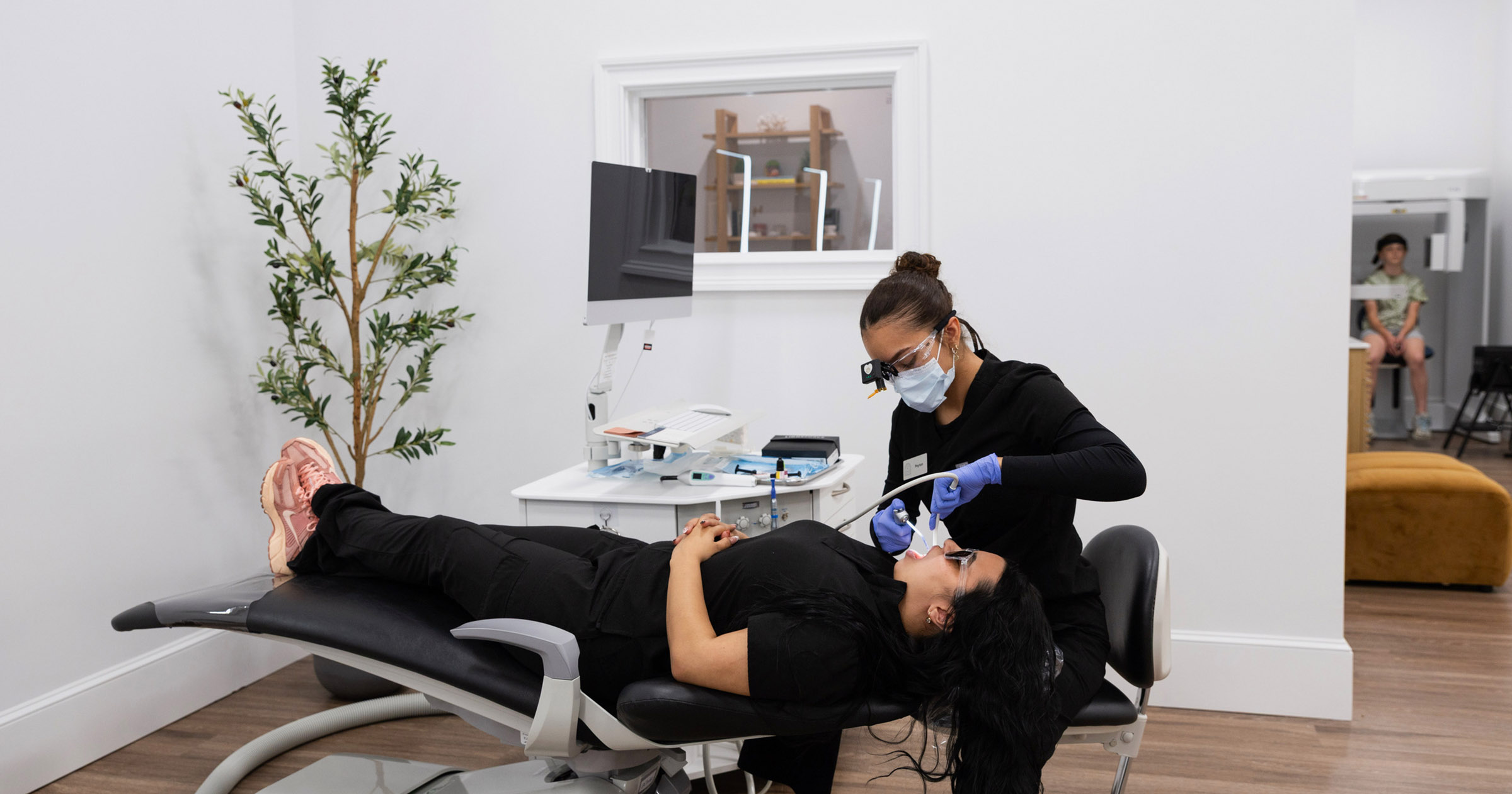
Two-phase treatment means an early first phase around age 7 to 10, then braces or aligners later. Which kids actually need it, and what it fixes.
By Dr. Courtney Lavigne, DMD, Board-Certified Orthodontist
July 6, 2026
If you've been researching orthodontists for your child, you've probably run into the phrase "two-phase treatment." Maybe another parent mentioned it, or a consultation ended with a treatment plan that felt bigger than what you walked in expecting. Here's what two-phase treatment actually is, in plain language, and the question nobody answers clearly enough: does your child actually need it?
What Two-Phase Treatment Means
Two-phase treatment splits orthodontic care into two windows that match how kids grow.
Phase 1 happens early, usually between ages 7 and 10, while the jaw is still actively growing. The goal isn't straight teeth yet. It's structure: widening a narrow upper jaw, correcting a crossbite, making room for adult teeth that are coming in crowded, or redirecting jaw growth that's headed the wrong way.
Then comes a rest period. No appliances, no monthly visits. We simply watch as the adult teeth come in.
Phase 2 is what most people picture as orthodontics: braces or aligners in the early teen years, once the adult teeth are in, to finish the alignment.
Think of it like building a house. Phase 1 is the foundation work, done while the concrete is still workable. Phase 2 is the finish carpentry. You can do beautiful finish work on a bad foundation, but you'll fight it the whole way, and some problems can't be fixed at all once the foundation has set.
The Honest Part: Most Kids Don't Need Two Phases
This surprises parents, so it's worth saying plainly. Most children do fine with a single phase of treatment in their teens. Two-phase treatment matters enormously for the kids who need it and adds very little for the kids who don't.
Signs your child may genuinely benefit from an early first phase:
- A crossbite. Upper teeth biting inside the lower teeth. This is the clearest case for early treatment, because a young child's palate can be widened with a simple expander while the bones are still separate. Wait too long and the same correction gets harder, less predictable, and eventually surgical.
- A narrow upper jaw with breathing signs. Mouth breathing, snoring, restless sleep, or nighttime grinding can all trace back to a narrow arch that's crowding the nasal airway. Widening the arch creates room for teeth and for air. This is the heart of airway-focused orthodontics, and it's how we evaluate every child.
- Severe crowding. Adult teeth with nowhere to go, headed for extractions later if space isn't made now.
- Front teeth that stick out far. Protruding front teeth on an active kid are an injury risk, not just a cosmetic issue.
- A jaw that shifts to one side when biting down, or baby teeth lost much too early or too late.
If none of these apply, the right plan is usually to wait, watch, and start once. An orthodontist who recommends two phases for every child is solving their scheduling problem, not your child's bite.
What Phase 1 Looks Like at Anchor
When a first phase is truly needed, it's simpler than most parents expect. At Anchor Orthodontics we use custom 3D-printed expanders made from a digital scan of your child's mouth. No goopy impressions, no uncomfortable metal bands. Most kids are eating normally within a few days, and appointments are short.
And if your child doesn't need Phase 1? We'll tell you that, explain what we're watching for, and see them again as they grow. Half the value of an early evaluation is a clear "not yet."
For a deeper look at Phase 1 specifically, including what the expander process feels like and how long it takes, read our Phase 1 guide for parents.
When to Bring Your Child In
The American Association of Orthodontists recommends a first orthodontic check by age 7. That's not because most 7-year-olds need treatment. It's because age 7 is when the problems that genuinely benefit from early treatment become visible, while the easiest window to fix them is still open.
You don't need a referral from your dentist, and consultations for kids are free. We see families at our Providence office on the East Side, minutes from East Providence, Riverside, Barrington, and Pawtucket, and at our Wakefield office serving all of South County.
Book an evaluation at our Providence or Wakefield office →